The History of the Lottery – From Sacred Ritual to Modern Entertainment


The History of the Lottery – From Sacred Ritual to Modern Entertainment
Letting fate decide has fascinated humankind for millennia. From ancient priests drawing lots to interpret divine will to televised drawings with multimillion-dollar jackpots, the lottery has evolved from a sacred ritual into a form of mass entertainment. Yet the core fascination remains unchanged: what happens when we surrender control to chance?
From Divine Judgment to Human Fairness
The earliest known lotteries can be traced back to ancient civilizations. In China, during the Han dynasty, drawings were reportedly used to fund public works such as the Great Wall. In ancient Israel, priests cast lots to determine temple duties, believing the outcome reflected God’s will. To draw lots was to remove human bias and let higher powers decide.
In classical Greece and Rome, lotteries and random selection also served civic purposes. In Athens, public officials were sometimes chosen by lot, a practice seen as the purest form of democracy—every citizen had an equal chance. The lottery thus became a symbol of fairness and impartiality long before it became a game of fortune.
Medieval Lotteries and Moral Ambiguity
By the Middle Ages, lotteries had taken on a new role: raising money. European towns and monarchs organized drawings to fund fortifications, bridges, and churches. One of the earliest recorded public lotteries took place in 15th-century Bruges, and the idea quickly spread across the continent.
The Church’s attitude toward gambling was ambivalent. Games of chance were often condemned as sinful, yet lotteries that supported charitable or religious causes were tolerated. This moral tension—between vice and virtue, greed and generosity—would follow the lottery for centuries.
The Lottery Comes to America
Lotteries arrived in the New World with the first European settlers. In the early 1600s, the Virginia Company held a lottery in London to raise funds for the Jamestown colony. Throughout the colonial period, lotteries financed roads, libraries, churches, and even universities such as Harvard, Yale, and Princeton. For a young nation with limited taxation, the lottery was a practical tool for public good.
However, as scandals and corruption emerged in the 19th century, public trust eroded. Many states banned lotteries altogether, viewing them as morally and socially dangerous. For nearly a century, legal lotteries disappeared from the American landscape—until the 1960s.
The Modern Revival: From Paper Tickets to Television
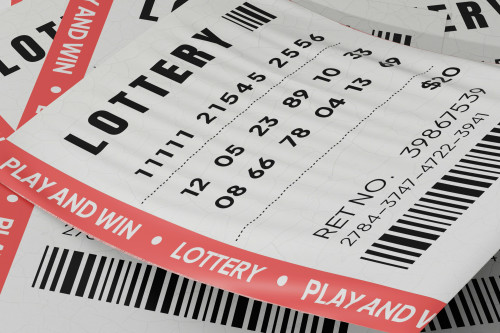
In 1964, New Hampshire launched the first modern state lottery, promising to fund education without raising taxes. Other states soon followed, and by the end of the 20th century, lotteries had become a fixture of American life. Weekly drawings were broadcast on television, turning the suspense of bouncing numbered balls into a shared national ritual.
Lotteries also became a source of fascination for mathematicians and dreamers alike. Probability theory revealed just how slim the odds of winning truly were, yet millions continued to play—drawn by the hope that lightning might strike.
The Digital Age and the Algorithmic Draw
Today, the lottery has gone digital. Random number generators have replaced mechanical drums, and players can buy tickets or check results online. Multi-state games like Powerball and Mega Millions offer record-breaking jackpots that capture global attention. The excitement of chance has never been more accessible—or more scrutinized.
With technology, however, comes a new kind of trust issue. Can we believe that a computer truly draws at random? To ensure fairness, modern lotteries employ independent auditors, encryption systems, and certified randomization algorithms. The ritual of chance has become a matter of cybersecurity and statistical integrity.
Læs også:


From Fate to Fun—and Back Again
Though the lottery is now a form of entertainment, it still carries echoes of its sacred past. When we buy a ticket, we’re not just chasing wealth—we’re engaging in an ancient act of surrendering to fate. The thrill lies not only in the possibility of winning but in the moment of uncertainty itself.
From divine consultation to digital spectacle, the lottery’s journey mirrors humanity’s enduring relationship with chance, justice, and hope. It reminds us that even in a world driven by data and design, there remains something irresistible about leaving our destiny to luck.
Læs også: